

2026 Hall of Fame Banquet
Monday, September 14, 2026
Reception: 6:15 p.m.
Banquet: 7 p.m.
Little America Hotel
500 South Main Street
Salt Lake City, UT 84101
Prices
Individual banquet tickets:
$90 through September 10
$110 beginning September 11
Table of 10:
$900 through September 10
$1,100 beginning September 11
ONLINE REGISTRATION OPENS on June 26, 2026
and closes on September 14, 2026
- Purchase tickets early; seats assigned on first come, first serve basis.
- Tickets will be mailed Tuesday, August 25, 2026.
- Tickets ordered after Monday, August 24, 2026, will be held at “Will Call.”
- Dress for the Fall Induction Banquet is business professional.
Contact Shay Wyatt (801-580-9557) with questions regarding the purchase of tickets.
2026 Hall of Fame Inductees
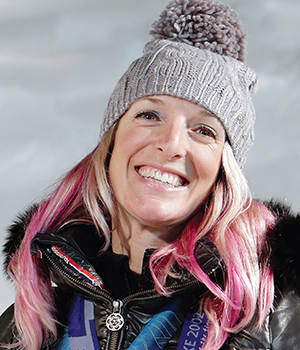
Shannon Bahrke
Skiing
The phrase “Utah ties” appears frequently in media accounts of the Winter Olympics and other major sporting events, connecting the audience to contestants who have grown up, trained or lived in the state. Shannon Bahrke earned that label in multiple Olympics, and now has her own, distinct description: Deep, transplanted Utah roots.
The two-time Olympic freestyle skiing medalist, a native of Tahoe City, California, has made Utah her home for almost exactly half of her life, as of her 2026 induction into the Utah Sports Hall of Fame. Shannon, along with her husband, two children and her business ventures, have established themselves in the state where she originally arrived as a University of Utah student in 1998. She might have become a Ute women’s soccer player, except, as she once humbly observed, “Turns out I am terrible at soccer, in the grand scheme of things.”
Of course, we knew where her athletic pursuits ended up: “Luckily, I made the US Ski Team that very year and never looked back.” She focused on those moguls and ramps in front of her, during a career that produced not only those silver and bronze medals in the Olympics, but also 27 podium finishes with seven wins in World Cup competition. She was inducted into the US Ski & Snowboard Hall of Fame in 2023.
Shannon’s silver came in Salt Lake City’s 2002 Olympics, leading to her contributions to the Utah 2034 board. In between, she added a highly significant bronze in Vancouver in 2010. As she once told skiing historian Tom Kelly, “People always ask me, what is the more meaningful medal? As much as I loved winning here in front of a home crowd, I think what I had to overcome to be able to stand on that (2010) podium and be able to share a podium with a teammate was really, really special. I mean I had to overcome two blown knees, a broken jaw and being the old lady on the team …”
Before and after those triumphs, Shannon applied the lessons learned in competitive skiing to business. Inspired by her husband, Matt Happe’s building a bicycle business, she founded Silver Bean Coffee in 2008. After selling the roasting company, Shannon launched Team Empower Hour, a corporate team-building company.
Shannon’s message is motivating. As she told Park City’s townlift.com, “The magic is in transitions, in the hardest things we have to dig deep for- like working through injuries. In the darkest moments, everything becomes clear: What can you let go of to make room for more in your life?”
She’s a polished, professional speaker whose acceptance of her latest award may include answering the question posed in the title of the children’s book she has written: “Mommy, Why Is Your Hair Pink?”
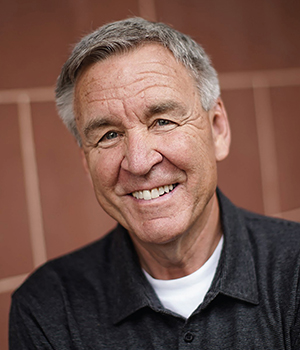
Lee Benson
Sports Writer
Lee Benson has chronicled all kinds of Utah success stories in sports and beyond, while rarely acknowledging one homegrown dynasty: His own.
Until now, Lee may have been the most overlooked candidate for the Utah Sports Hall of Fame, and not just among media members. That likely was due to his move away from full-time sports writing at age 50. Lee is still a prolific newspaper writer in his late 70s. With the same enterprising spirit that once led him to find stories while bicycling along U.S. 89 from one end of Utah to the other, he continues to deliver weekly personality profiles in a Deseret News career that now has extended beyond a half-century. And, for a quarter-century, he was by far the most recognized sports journalist in Utah, while making a further, lasting impact in developing other notable writers. Consider that from 1976-90, a 15-year span, the graduate of Jordan High School and BYU was voted 14 times as Utah Sportswriter of the Year by members of the National Sports Media Association.
As sports editor, Lee created a legacy that included discovering or nurturing the likes of Doug Robinson, Brad Rock and Mike Sorensen, all Deseret News legends in their own right.
With Lee establishing the tone of coverage, reflecting both the opportunities and challenges of mostly afternoon publication, the Deseret News Sports section of the ‘80s and ‘90s was a writer’s haven. As a columnist from 1978-98, he made the newspaper a national player in sports media.
Lee’s work was so valued by management that he was sent to a phenomenal number of major events: 16 Super Bowls, 14 Final Fours, 13 major golf tournaments, 10 Olympic Games, eight NBA Finals, five World Series and one Wimbledon. He succeeded in finding Utah angles and giving readers his perspective of memorable moments in sports.
Among Lee’s hallmarks was his ability to humanize sports figures, amid their triumphs and disappointments. When golfer Mike Reid missed an opportunity to win the 1989 PGA Championship, Lee captured the widespread consoling of Reid by writing, “Maybe he did let one get away on national TV Sunday. Maybe he did conduct an audition in front of the entire country to replace that skier who misses every jump every Saturday on ABC’s ‘Wide World of Sports.’ But nobody’s happy about it. In that way, defeat can identify your status, your respect. … In that way, it’s not agonizing at all.”
Any account of Lee’s career has to include the mention of his twin brother, the late Dee Benson. As Lee once said, “In journalism school, they tell you to have one person in mind when you write stories. That person was Dee. I never wrote anything that wasn’t to him.”
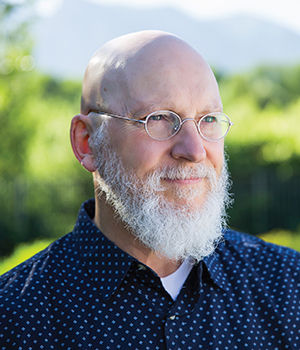
Blair Buswell
Sculptor
Let’s be honest, the awards and displays recognizing inductees into the Utah Sports Hall of Fame are very nice. Yet there’s no comparing them to the commemoration of members of the Pro Football Hall of Fame: Busts, sculpted by Blair Buswell- and that’s also why Blair is the first artist in the Utah Sports Hall of Fame.
A former football player and track and field athlete at Weber High School, Blair created his own niche in BYU sports history. As a reserve running back best known for his blocking, Blair once told the Deseret News that BYU coach LaVell Edwards “liked me, because I was a freebie. I was on an art scholarship.” So, it has become a good story, how Blair donated his talents and effort to helping protect Cougar quarterback Steve Young, and eventually would create the bust that signifies his former teammate’s Pro Football Hall of Fame status. “I’m just glad he didn’t hurt his hands,” Young once told ESPN.com, recalling Blair’s BYU football days. Young also reflected, “Here’s someone that you knew when you were a kid, and now they’re doing something of national acclaim and you can’t believe that you both ended up in such interesting places. He is so accomplished.”
More than 130 busts in Canton, Ohio, stand in tribute to Blair’s talent, and how he manifested his career destiny after touring the Pro Football Hall of Fame as a teenager. Blair’s first bronze sculpture came when he designed the Competitor Award for BYU’s Cougar Club (the recipient: football teammate Kyle Whittingham). The road to Canton also begins in Provo. While in town to address the Cougar Club banquet, legendary San Francisco 49ers coach Bill Walsh learned of Blair’s ability and asked him to build a statue of team owner Eddie DeBartolo. Blair’s Pro Football Hall of Fame opportunities soon began with a bust of Sid Gillman, and he has just kept sculpting.
Among Blair’s many other notable works are a larger-than-life-sized statue of former Utah State star Merlin Olsen on the plaza of Maverik Stadium in Logan, plus the likenesses of John Wooden in front of UCLA’s Pauley Pavilion, Gen. Robert Neyland at the University of Tennessee stadium bearing his name and Charlton Heston at the National Cowboy & Western Heritage Museum in Oklahoma City.
“I have always been fascinated by the human figure,” said Blair, who resides in Alpine and works in a Pleasant Grove studio. “I like the challenge of capturing the gesture, mood and expression of my subject. I have learned that all great art starts with a strong composition that leads the viewer’s eye through the abstract shapes while keeping him engaged. I try to combine all of these elements together to bring a sense of life to my work.”
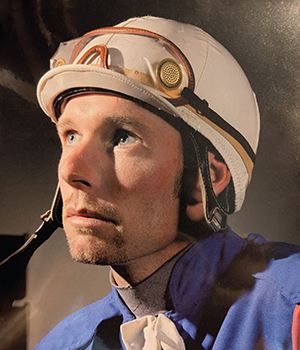
Cody Jensen
Jockey
Cody Jensen has his own niche in the Utah Sports Hall of Fame, yet he also has a lot in common with other inductees. How do you reach this level of achievement? By coming through when it counts.
He’s modest, but as one of the greatest quarter horse jockeys of all time, Cody acknowledges that he was a “money rider.” As he explained in a podcast with Billy Peterson, another legendary Utah jockey, “Everybody thinks they want the ball in the fourth quarter. Very few actually do. You have to be able to take advantage of the opportunities when they come.”
In other words, owners and trainers kept giving Cody some of the top mounts in the biggest races, and he kept delivering. He rode horses that earned more than $40 million. To fully appreciate his success, you have to disconnect from traditional winning percentages in other sports. Just understand this: Anyone who won more than 1,600 races, even while competing nearly 10,000 times, was a dominant performer.
As Cody grew up on the family farm in the Cache Valley town of Providence, his father, Leon, wouldn’t let him race horses until graduating from Mountain Crest High School. There was still plenty of time for Cody to channel his self-described personality as “a hard-core adrenaline junkie” and become a renowned jockey. As he said, “I got on my first horse, and I was like, “All right!’ “
Cody won nearly every major quarter horse race, including the All-American Futurity and the All-American Derby twice each and the Champion of Champions once. He was inducted into the Ruidoso Downs (New Mexico) Hall of Fame after twice being the track’s leading rider for the season. He also won season titles at Wyoming Downs and the famed Los Alamitos in California, where his career really took root.
Recognition of traits on and off the track further distinguished Cody. The Jockey’s Guild presented him the 2013 Jacky Martin Award and the 2014 Sam Thompson Memorial Award for his professionalism, character and impact on the sport. Cody was a good friend of Thompson, who died of racing injuries. The award is a reminder of both the innate hazards and inevitable that jockeys deal with, and also the camaraderie of the jockeys’ room that Cody misses.
While the lifestyle was challenging, he loved it: and quarter horses were his lane, from the starting gate to the finish line of his career. “I’m a western guy,” he once told The Herald Journal of Logan. “I grew up around quarter horses, my dad rode them, and quarter horse racing is my thing. It has probably cost me some opportunities in my life, riding quarter horses instead of thoroughbreds, where the purses are bigger, but I wouldn’t trade it.”
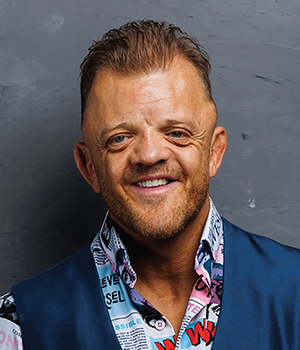
Ben Kjar
Wrestling
Judging by his athletic accomplishments, Ben Kjar nicely blends into the Utah Sports Hall of Fame’s all-time roster. With his personal story, he stands out. That phrase borrows from the title of the documentary film starring the wrestler himself. “Standout: The Ben Kjar Story,” goes far beyond wrestling to deliver a powerful message of the way Ben has gone about his life.
On the screen, the graduate of Viewmont High School and Utah Valley University acted out the experiences that created “a heartfelt story (that) inspires anyone who has ever felt they don’t fit in,” and serves as an “unforgettable portrait of perseverance,” according to the movie’s promotional material.
Born with Crouzon Syndrome, a rare, craniofacial disorder, Ben has crafted a life story with multiple layers. This point is vital, though: Wrestling is the reason Ben is being inducted into the Utah Sports Hall of Fame.
At Viewmont, he became a three-time state champion (and there’s a good story below attached to that label) with a 125-6 career record. He didn’t even allow an opponent’s takedown in his senior season of 2002, while leading the Vikings to their first wrestling state championship.
Ben later became UVU’s first All-America wrestler, finishing fourth in the 2011 NCAA Championships after a semifinal loss to Anthony Robles, another star of his own inspirational movie (as well as Ben’s). Having never lost a home match in college, Ben was named UVU’s Male Athlete of the Year. And in 2023, following a lengthy absence from competition, he won a Masters World Greco-Roman title.
Having said all of that, everything else that Ben dealt with outside of the wrestling room, in terms of bullying, judgment and mistreatment in his youth makes his multidimensional story that much more meaningful. As he said in the movie trailer, “I would just put my head down and try to hide.” The parallel tracks of his wrestling success and personal triumphs provide great material for his professional speaking career, that’s for sure.
His parents, Scott and Stana, established the framework. As Ben discussed in a franklinplanner.com podcast, his mother once told him, “Ben, I see somebody who’s different, who’s born to make a difference, and you my friend, are born to stand out.” Ben’s conclusion: “That would change my life.” He became the confident, determined wrestler who chose to have that “3XSC” (three-time state champion) patch sewn onto his jacket after his first title as a sophomore. You know the ending: “I never had to take that patch off.” As Ben explained, “I had people in my corner, encouraging me, that I call my ‘shot callers.’ They’re my encouragers, the people that hold me accountable.” He’s hoping to do the same for his three children.